Response to assignment 1 tutorial discussion -influences

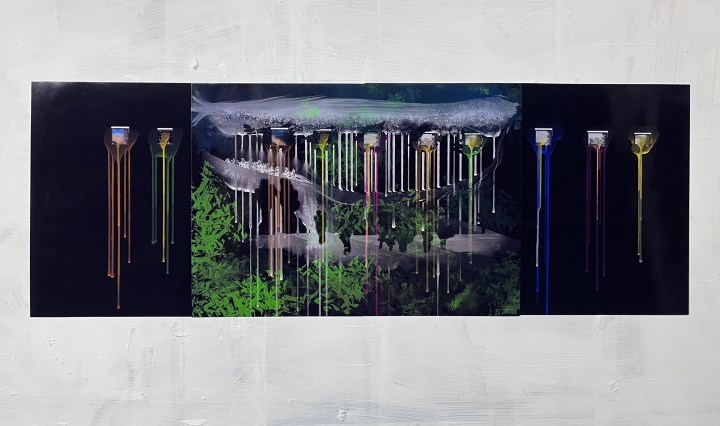
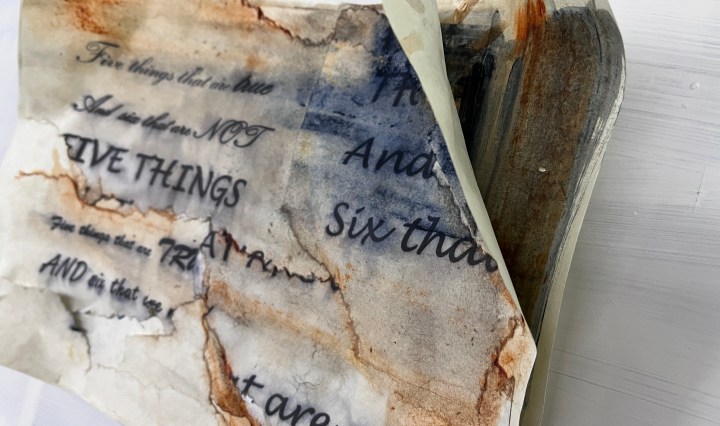
There were two stand-out elements to this discussion and the formative feedback that followed. The first was very clear support for the digital process, whether via painting/photo editing apps or animation and film, and that development of expertise here would count towards assessment of technique and range of media investigated. The second related to the notion of influences. I have never been conscious of influences in any sphere of academic application or practice; which is not to say there have been none, it simply means I have most likely absorbed the gestalt of the influence(r) and forgotten the rest. I … Continue reading Response to assignment 1 tutorial discussion -influences

Option 1, exercise 1.3 research point

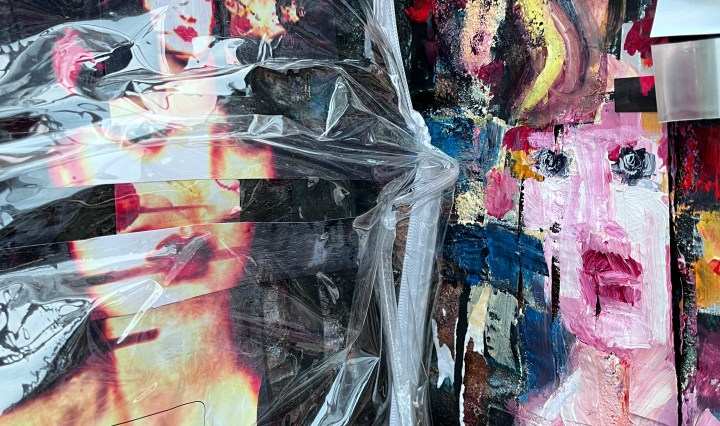
Meret Oppenheim 1913-1985 https://www.huffingtonpost.co.uk/entry/meret-oppenheim_n_5031039 Meret Oppenheim: Mon Exposition / Retrospective at Kunstmuseum Bern This is a retrospective with no dialogue or captions but that clearly shows Oppenheim’s astonishing range of styles. Some of the paintings/sculptures/assemblages crop up in discussions or … Continue reading Option 1, exercise 1.3 research point

Project 4: mirroring and the multiple

I’m coming to this at a moment when a mirror made on earth is about to reach its orbital insertion point one and a half million kilometres away. Its job will be to look back through time, as they put it, examining wavelengths originating close to the beginning of the universe. Just now, it’s twiddling its individual mirrors and looking, from the graphic, as if it just invented Space Invaders, but in a few days it will arrive at Lagrange Point 2 and begin orienting, focusing, and settling into place. Astro physicists have all sorts of expectations about the meaning … Continue reading Project 4: mirroring and the multiple

Option 1, exercise 1.2: the digital

I’m calling this exercise 1.2.1 because there is going to be at least one more. This exercise builds on appropriation and collage, introducing the notion of the glitch and informed by, for example, Gordon Cheung. I was more than pleased to see that I could use primarily digital methods in the making of the images. I used three random screengrabs; one of a zoom meeting about book cover design run by the Edinburgh book festival last year, the second of a spider’s web across the live stream webcam at Porthcawl pier, and the third of a google search for ‘obliteration’ … Continue reading Option 1, exercise 1.2: the digital

Back to Option 1 – the edit and the digital

Project 3 focuses on Donna Haraway, an American scholar noted for many things but primarily in this context, her 1984 ‘A Cyborg Manifesto: Science, Technology, and Socialist feminism in the Late 20th Century’ in which she argues that all of us in, (at the time), western societies have become so integrated with technology that the distinction between humans and machines is blurred. That was a prescient view, given the actuality of technological integration at the time. Unfortunately, none of the referenced texts is available via the links in the course materials but there is a plethora of video material, including … Continue reading Back to Option 1 – the edit and the digital

Research point Option 1 – Gordon Cheung (1975-)

Unfortunately, the link to a text in the course materials, this one titled Colart Loved By: Gordon Cheung, is dead but the video article is not and so I am relying on that and articles found in a search for Colart. This is from Elephant which seems to be a magazine: “London-based artist Gordon Cheung discusses his tools of choice: a computer, spray gun and paint. You can find out more about Colart’s Loved By campaign, which launches this weekend [January 2018] at Creative World in Frankfurt.” https://elephant.art/colart-loved-by-gordon-cheung/ In the video, Cheung talks about substituting other materials for paint – … Continue reading Research point Option 1 – Gordon Cheung (1975-)