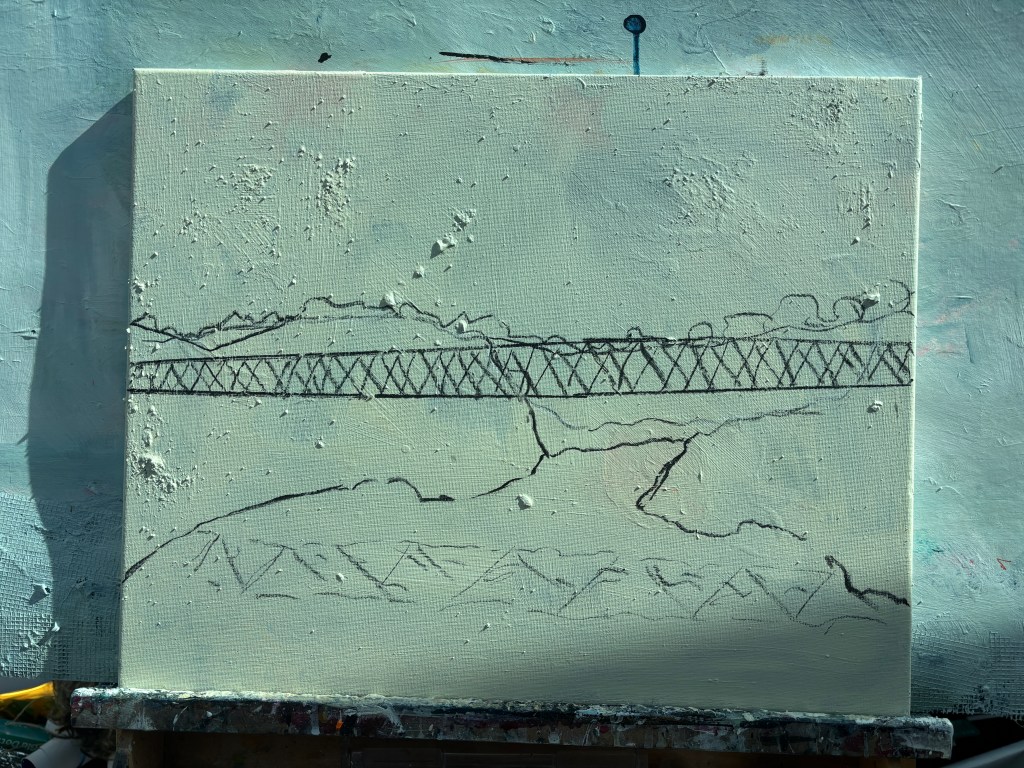
Charcoal sketch of the new bridge and the surrounding landscape. Canvas is 40×50 cm.
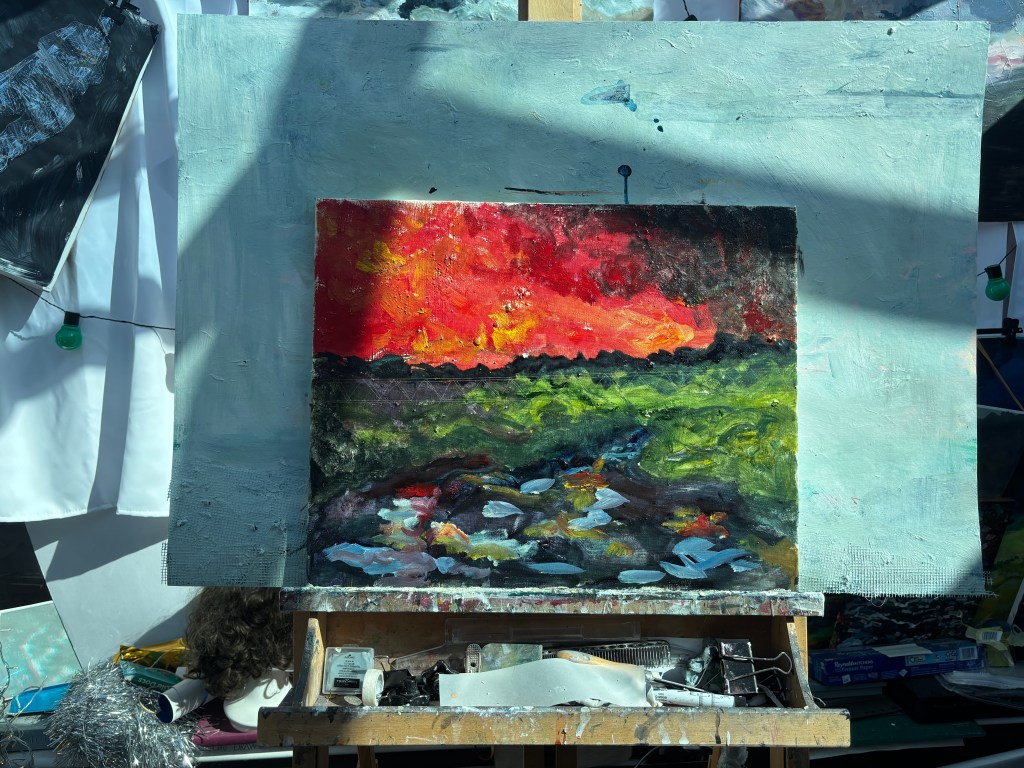
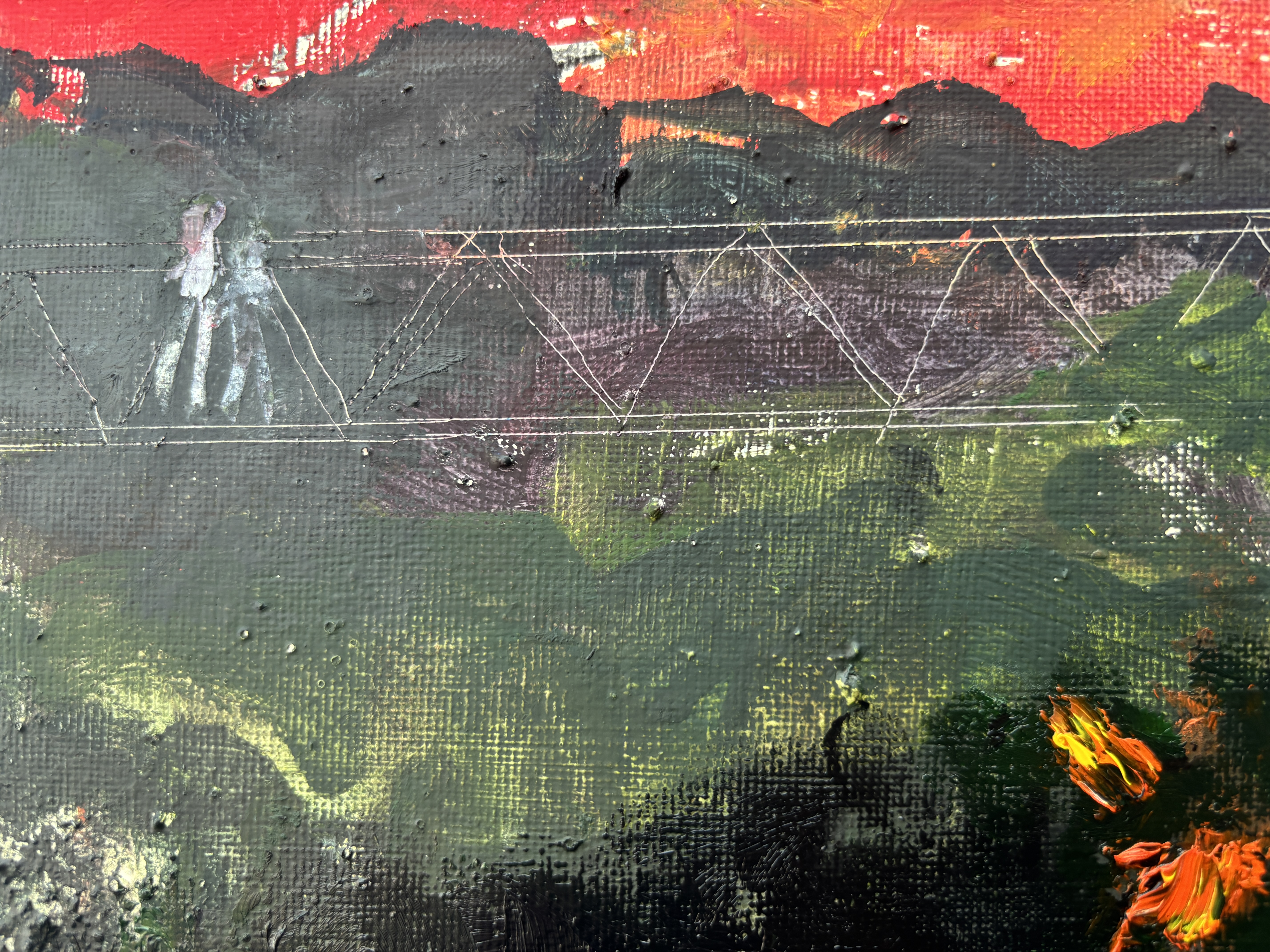
This moved very quickly, grimly in keeping with the nature of wildfires. The bridge here is barely visible and I was still debating with myself whether or not to give it a sharpness inconsistent with the rest of the imagery (on the grounds that it’s the only human-made artefact in the scene) or to use the approximation technique whereby the subject is implied rather than stated.
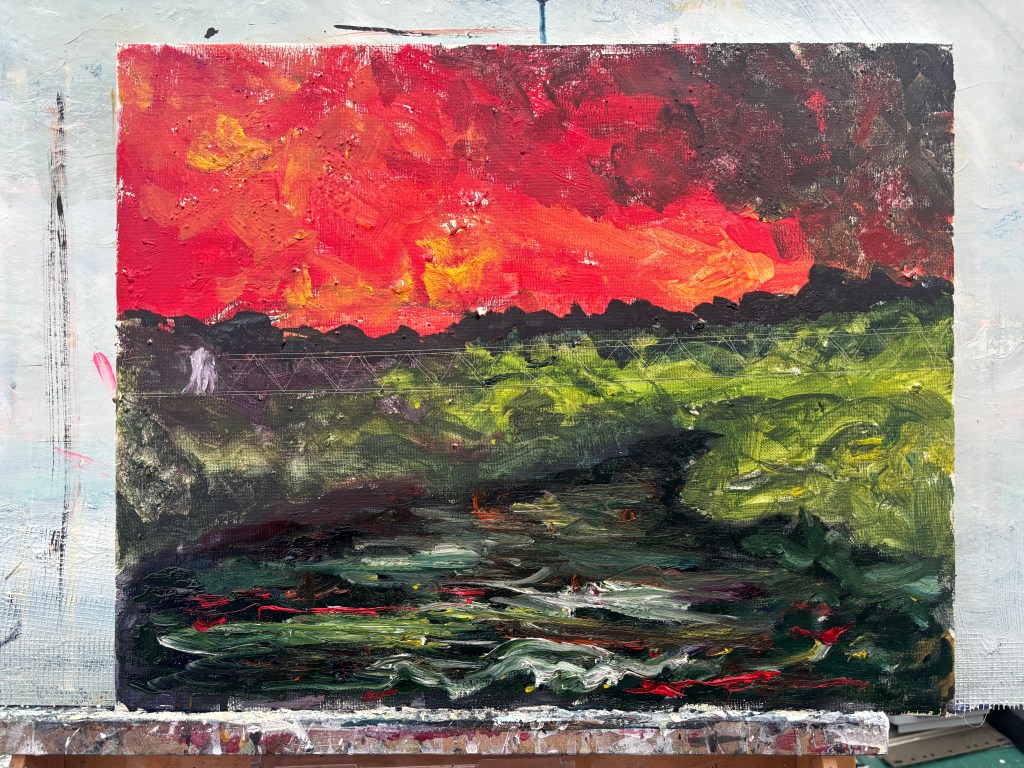
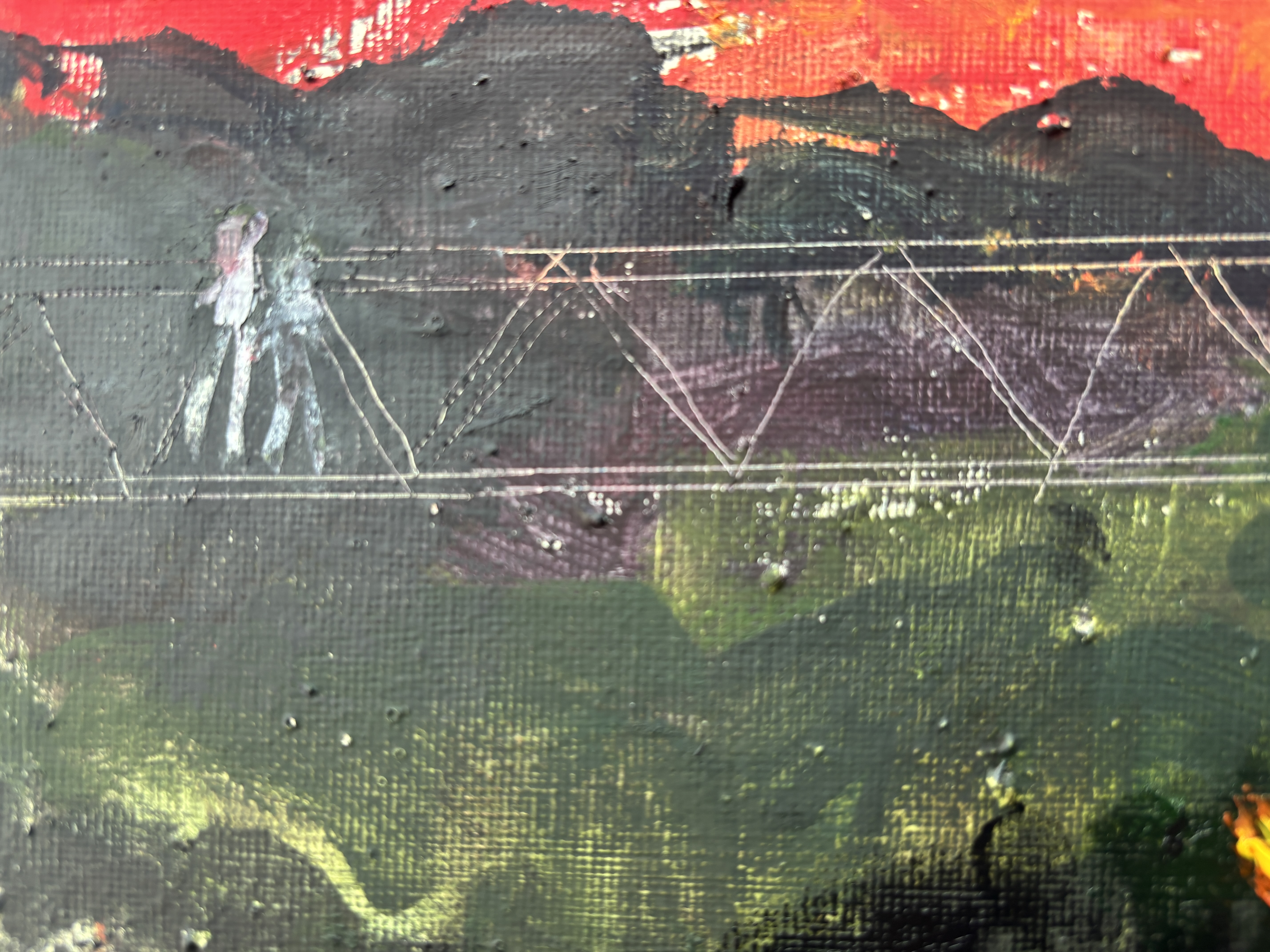
I went with the precise option but as a very minimalist suggestion, using a stylus to scratch the lines of the bridge into the paint. The figures on the left are cut from tracing paper and stuck to the surface with the wet paint. I’d intended to paint them into the landscape but after sitting with the whole image a while, I began to feel that they may represent the people caught up in wildfires and those whose job it is to rescue them. Or they could be the unfortunate ghosts, doomed to cross that bridge in perpetuity.
The green foliage is a bit bright although I’ve been struck by the contrasts between affected and unaffected areas in these situations – burnt out on one side of a wall, lush green on the other. Some side research revealed the true value of trees which is that they provide shade that is 10% more effective than an equivalent built structure because they contain moisture. This would have been the key advantage here but for the grass beneath the trees and shrubs which is parched yellow and would go up at the drop of a spark, something I felt it necessary to point out to a man wearing a cigarette like a precariously balanced lip accessory as he arrived in his lorry to do fencing work near the nature reserve. He was not obliging but may have been more cooperative when the Wardens had a word a little later.
This is not done yet; I can still feel that one sceptically arched eyebrow. I think it needs to be darker and I think the river needs to be more reflective. Same currents, different colours.
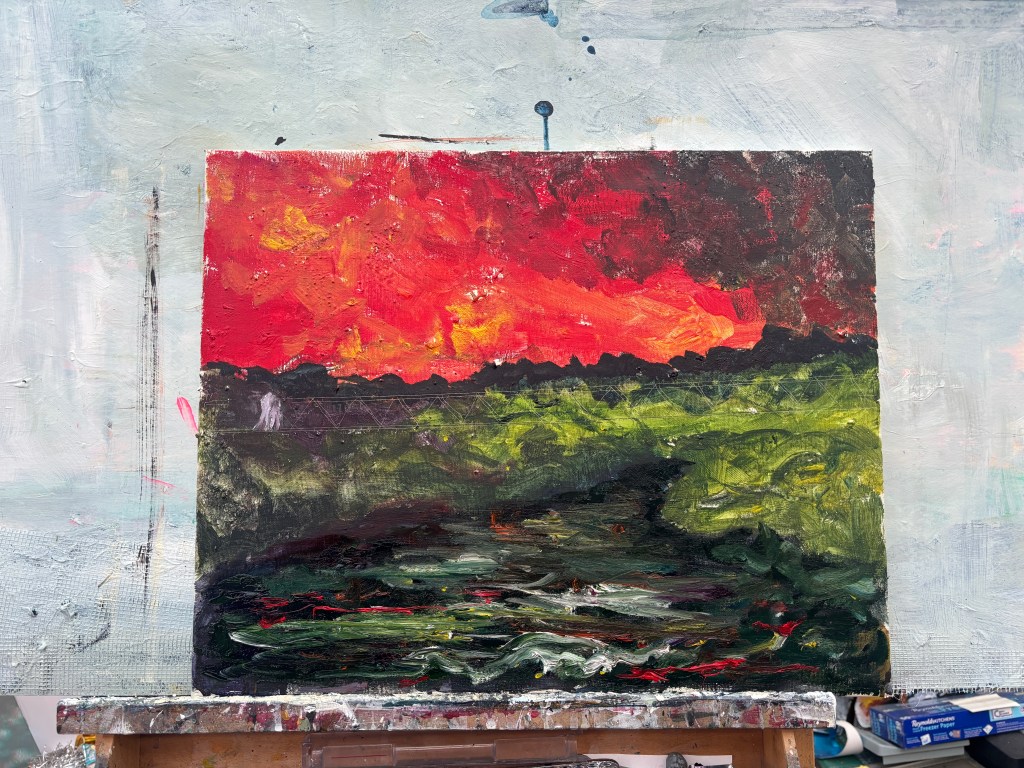
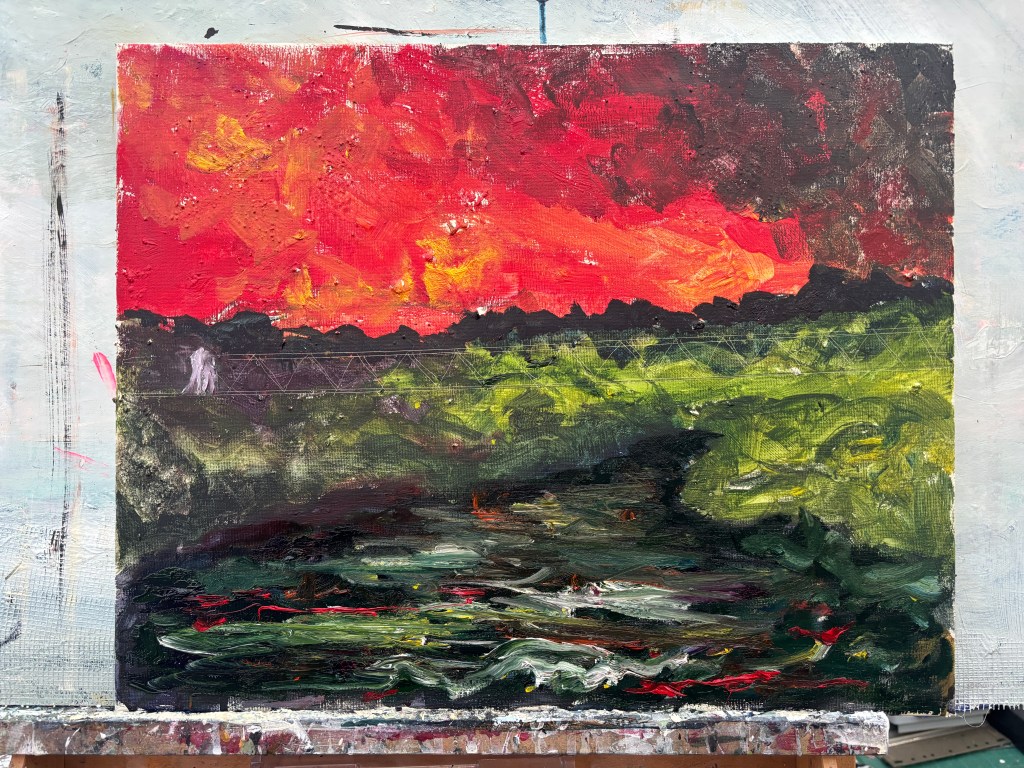
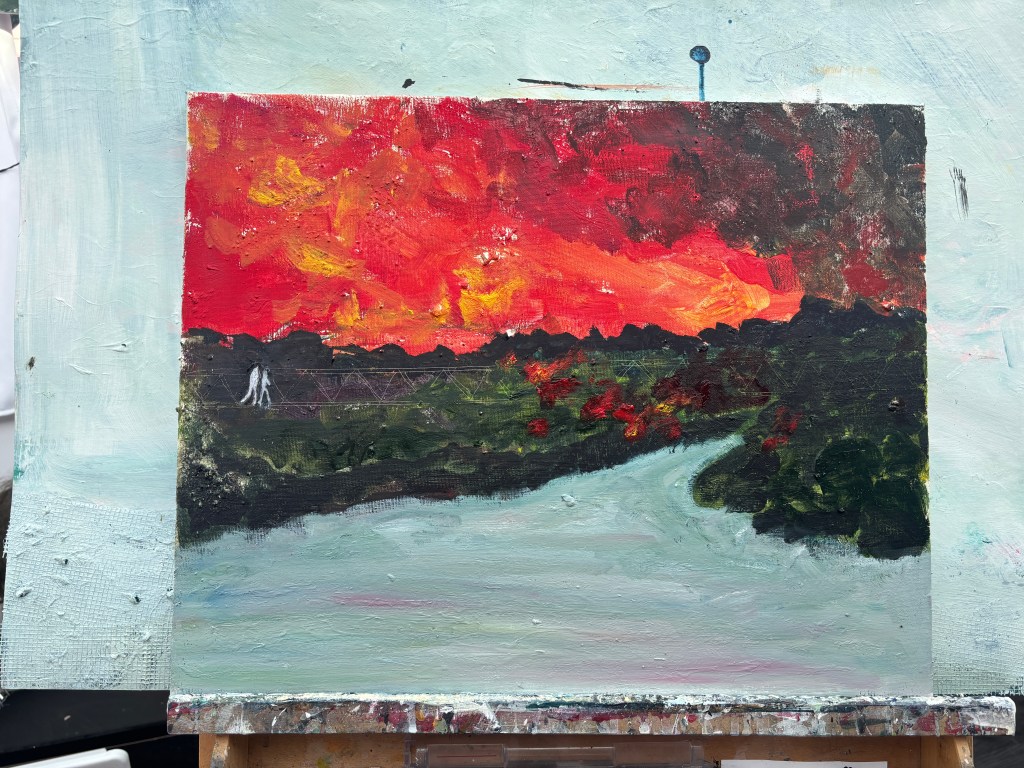
The two figures on the bridge are deliberately non-specific and represent our blind adherence to behaviours that will inevitably lead to the destruction of our habitable environment.
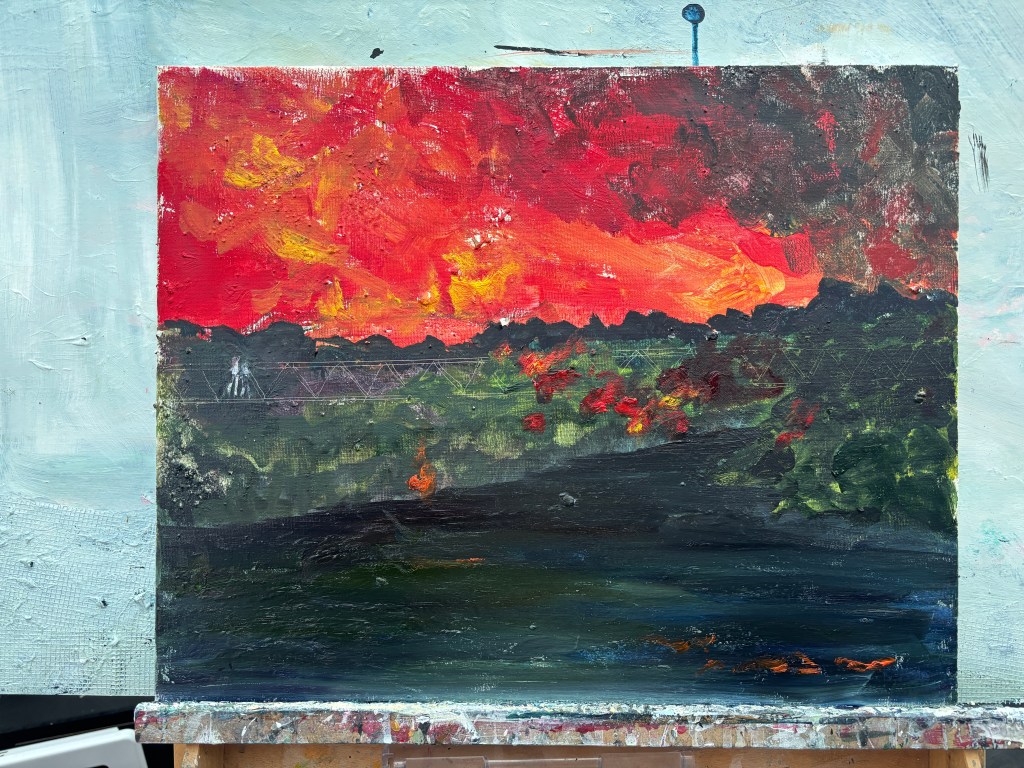
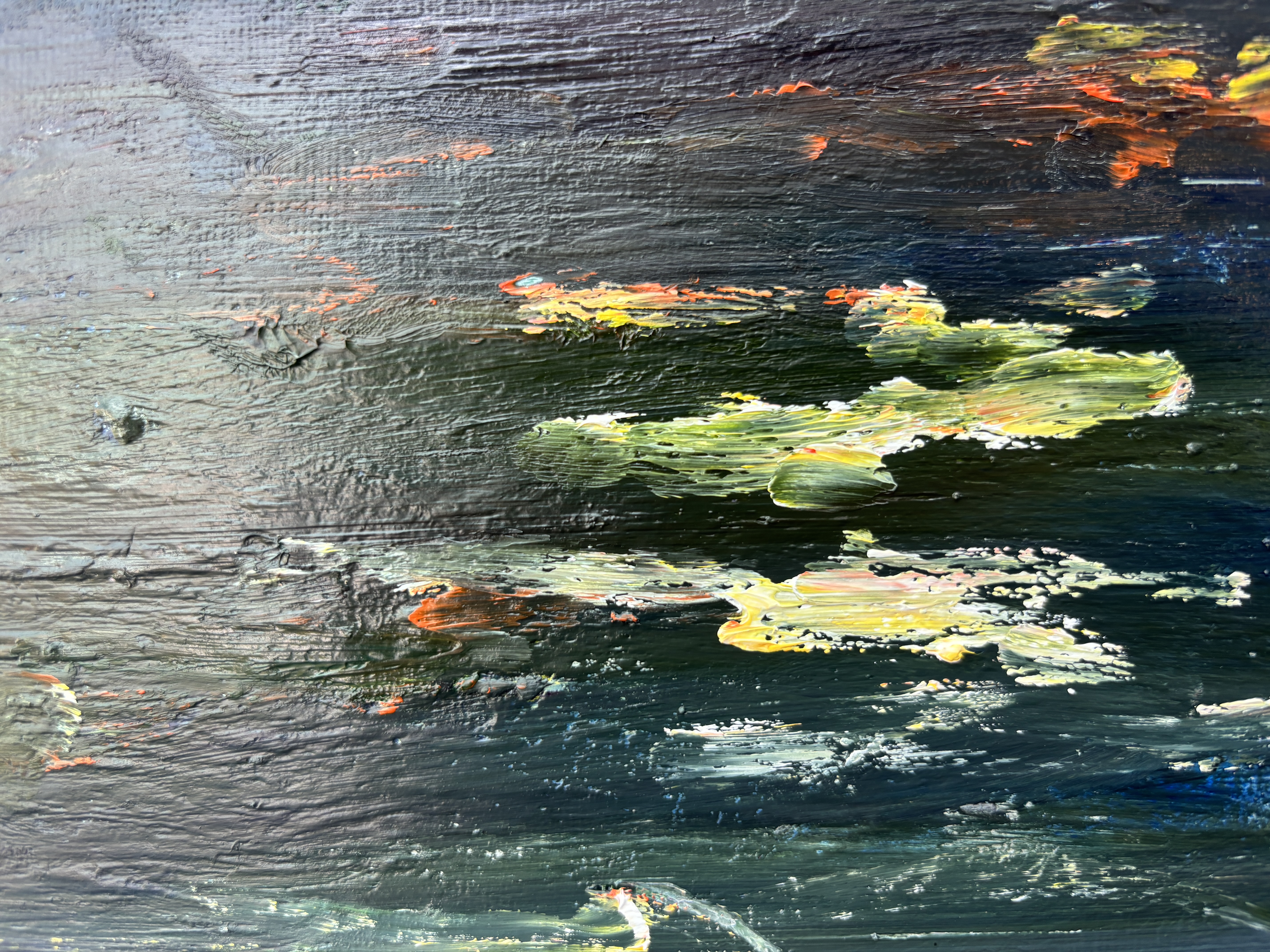
The figures were cut from somewhat robust tracing paper, which kept curling up and falling off! Meanwhile, I rendered the river as a dark and oily, slow-moving entity with reflections of fire on its surface.
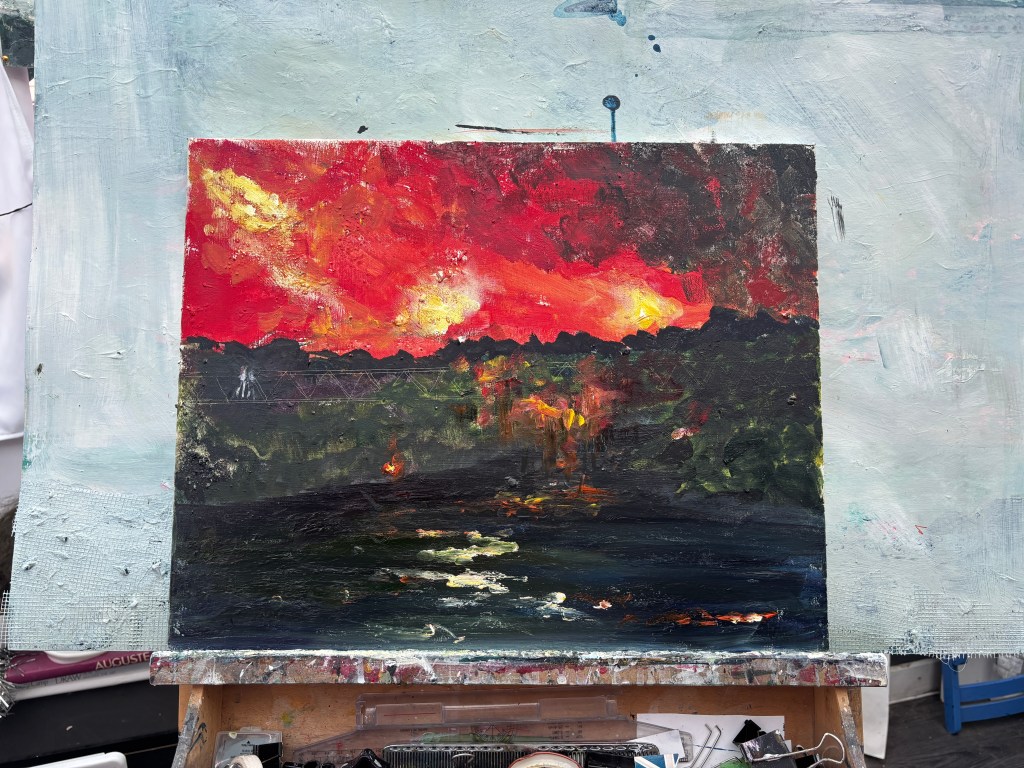
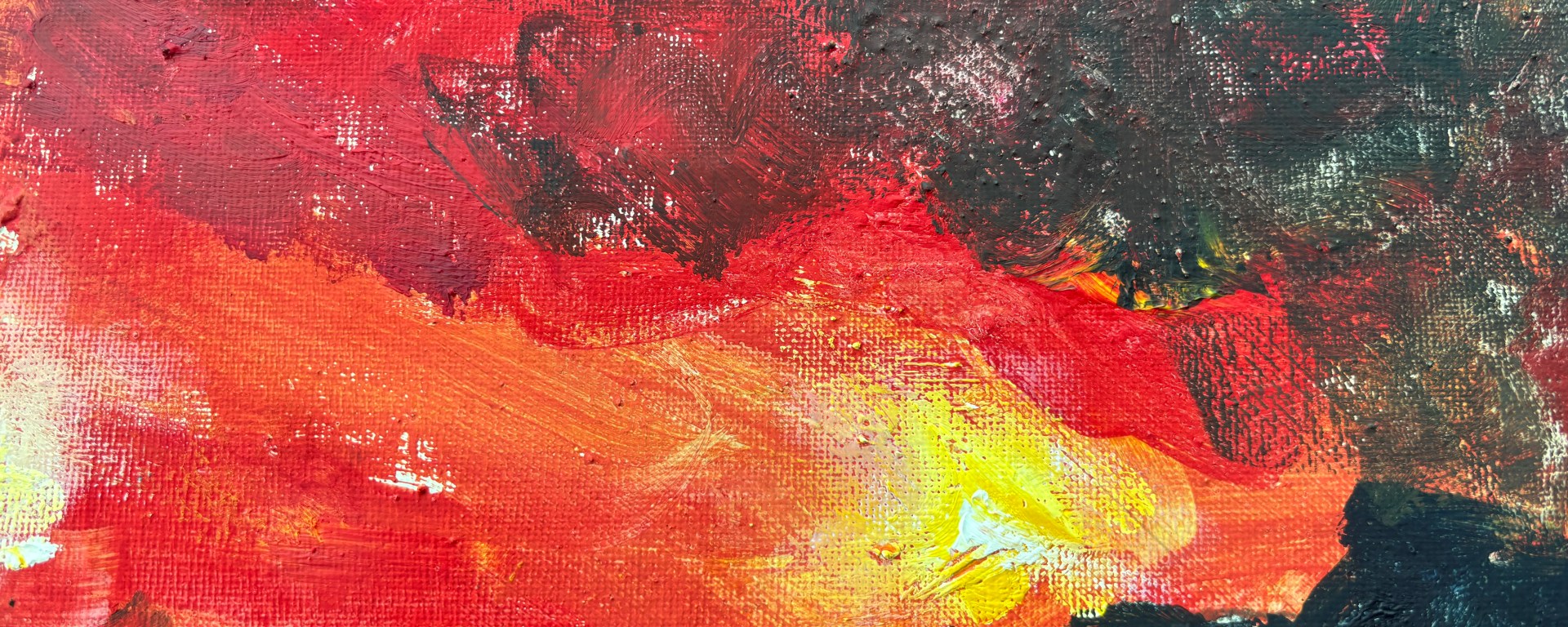
The scene seems to have moved itself on from a ground-based inferno to one resulting from fiery comets. There’s a little more indication in the river that it may still be water. And it seems to me that the bridge may be melting. There are indications of moving water now in the river, and also of gobbets of melted metal falling into it from the bridge.The figures now are probably ghosts; memories of a time when leaning on bridges to watch the ducks go by was a daily deep-breath restorative freebie.
I’ve said elsewhere that, as a writer and now near-graduate painter, almost everything I make here has a story, and if it doesn’t, I usually discard it. But the story always develops with the painting; it doesn’t shape it or drive it. I’m not an illustrator. This began as a straightforward landscape but evolved as the news filled with wildfires; some spontaneous, some started by idiots; and I began to see the new bridge, melting in a fire we could never have imagined, as a symbol of our destructive neglect.
Now I know what it is, it feels vaguely unfinished, but the finishing will be relatively discreet.
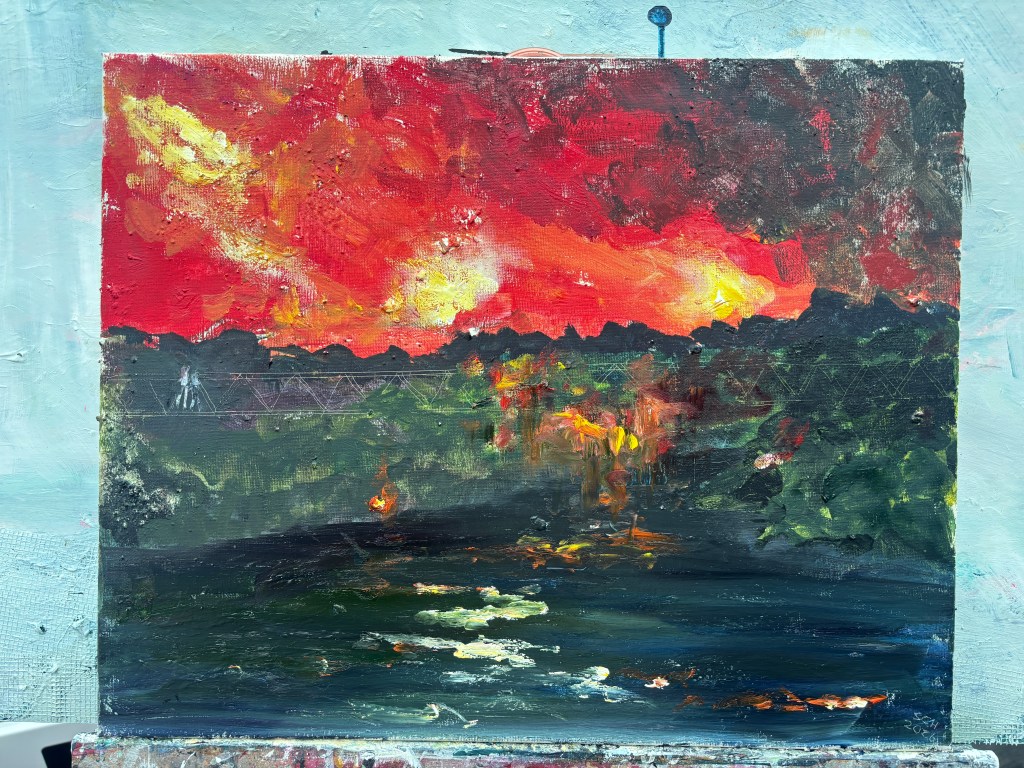
Shine is still an unfortunate side effect of oils/water soluble oils. Finishing was a signature.
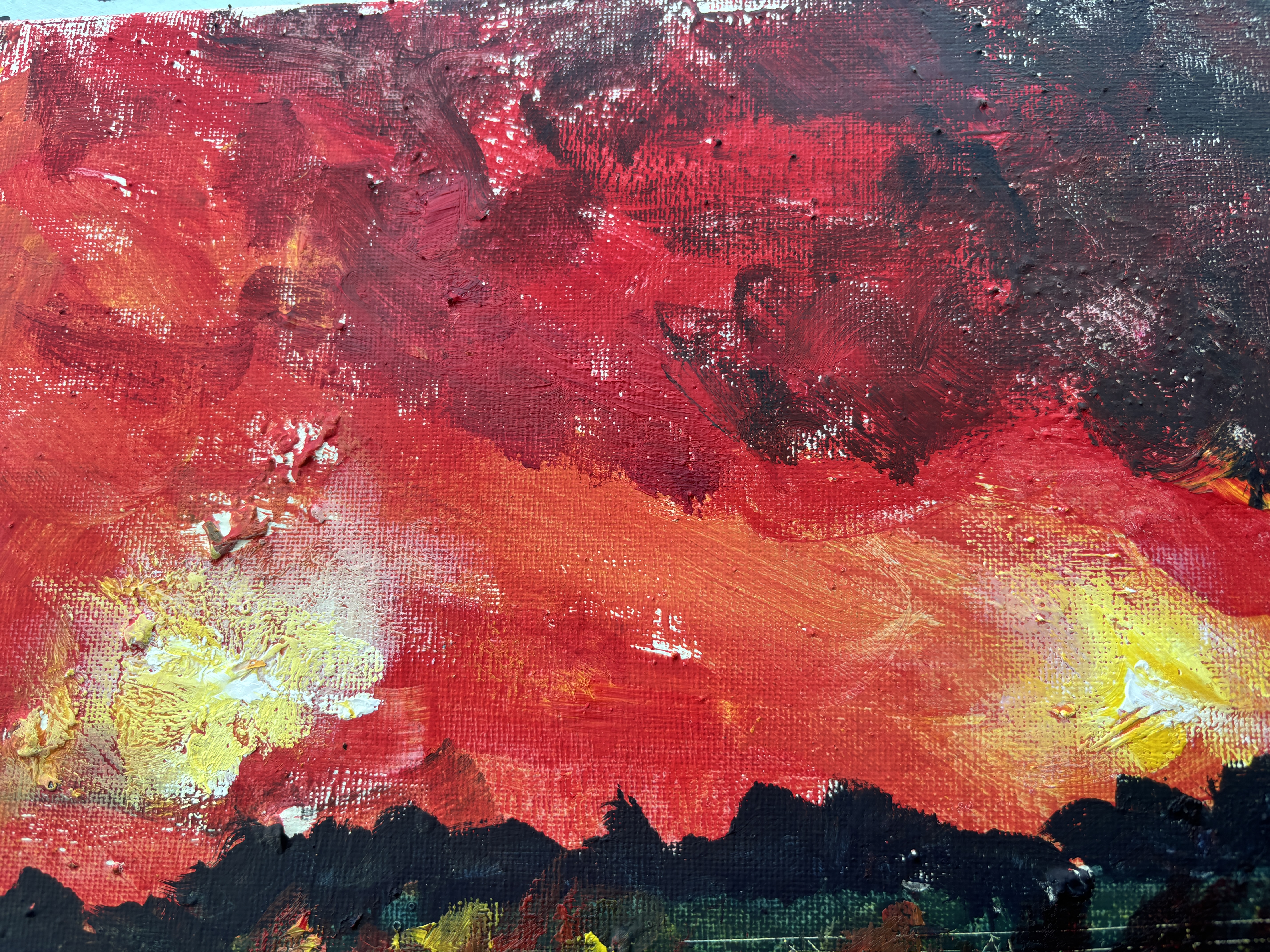
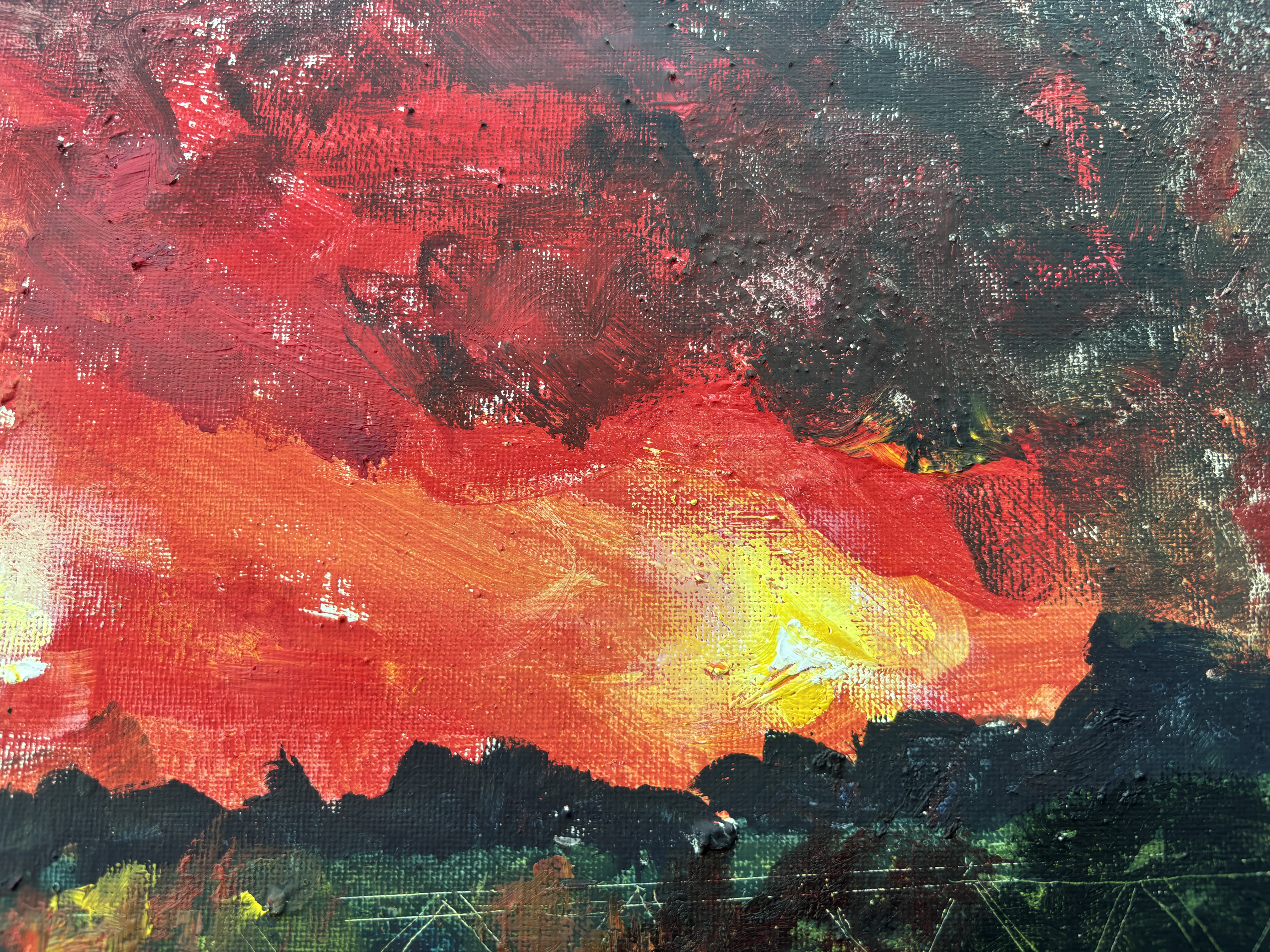
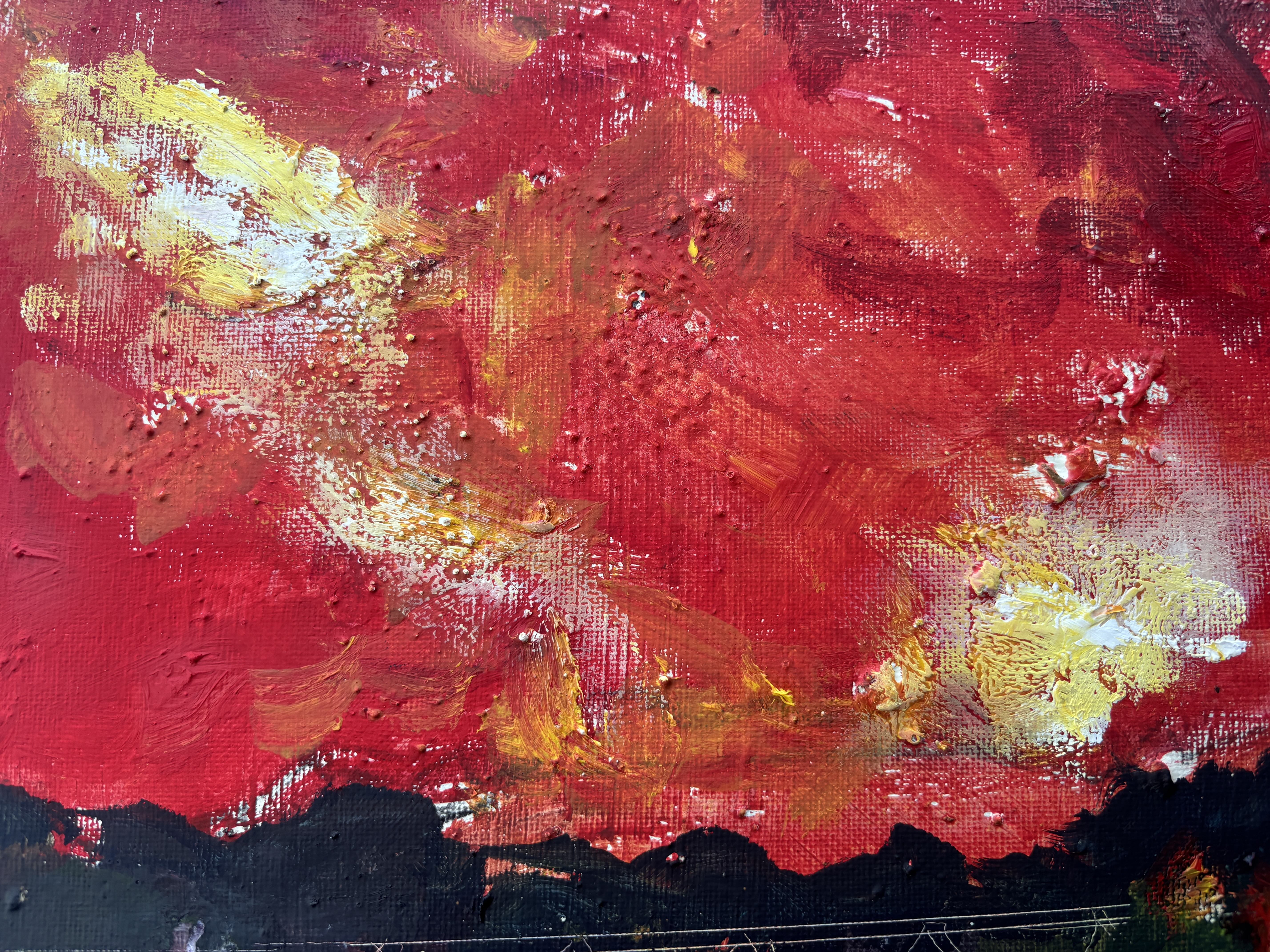
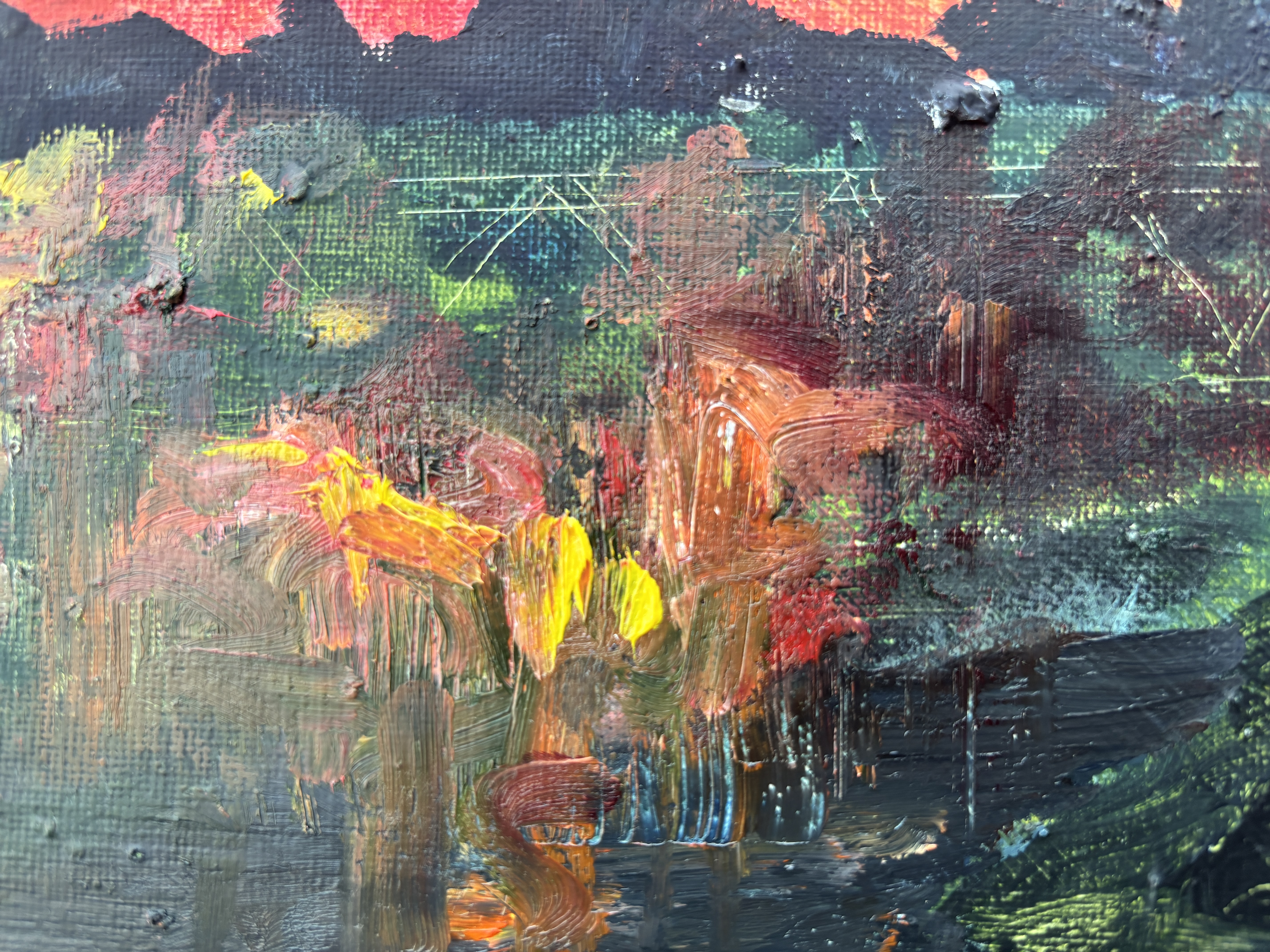
The back story here, and one which is all too real a possibility, is the extremely dry grass along the river bank and into fields either side. It would only take a spark from a careless cigarette or a beam of light magnified by glass litter to set off an inferno. I think that may be its title: Cigarette Skies.
I have a second, related, piece just about ready to post and I’m planning a third.
© Suzanne Conboy-Hill 2026
 Strayfish Arts