Critical review, option 1 – communication

Group think in art – is this a fundamental problem for the critique? Summary Creative arts are, by their very nature, subjectively received and evaluated. Reviewers and critics, on the basis of education and experience, are arguably the ones who draw lines for the rest of us between the populist and the critically acclaimed. But use of language is itself an art; influencing others and persuading them of value and merit. I will argue here for raised awareness of the power of language to influence the setting of subjective criteria, introducing researched techniques that place opinion under scrutiny and avoid … Continue reading Critical review, option 1 – communication

Part 2; research point 5 + reading points

Let’s Do It Together – Tate Etc | Tate – “Even the term neo-dada, sometimes applied to his early work, does not do justice to Rauschenberg’s attempts to distance himself from traditional art-making practices and goals. The dadaists had, indeed, used non-art media and approaches, and more recently Jean Dubuffet had employed mundane materials. Maybe it makes sense to look elsewhere for rauschenberg’s signal innovation; in particular, to the artist himself. In the way he presented himself, his hair and clothing styles, his ever-ready smile in photographs, in his eagerness to collaborate, to subsume himself into collective art-making complexes, he … Continue reading Part 2; research point 5 + reading points

Parallel project #4

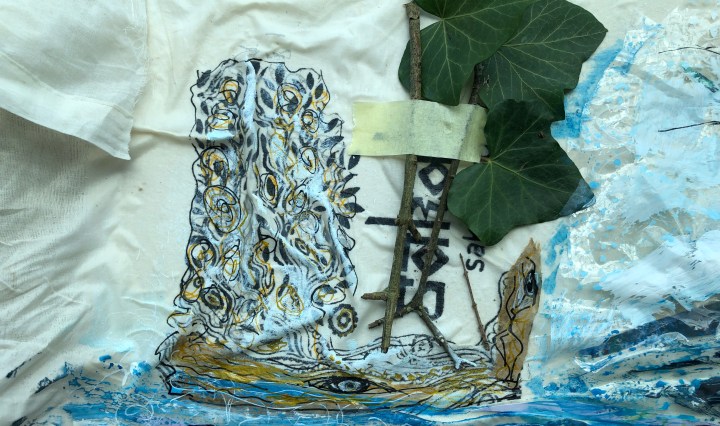
Thinking again about magical realism, I’m reminded of a short story of which this is the opening paragraph: “The sea had embroidery at its edges. It cast a frill of pretty ruffles over the pebbles and sank like fine silk in between them before the giant in the deep ocean turned over in his sleep and drew it back.” Not Blue Not Fresh Not Ever Free (unpublished short story) It brings to the people on the land whatever they want; different kinds of items on different tides – clothes one time, furniture another. Beyond that, their world is normal and … Continue reading Parallel project #4

Parallel project #3

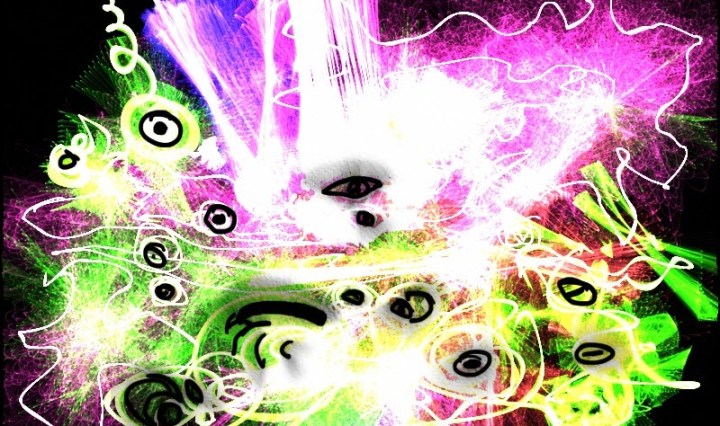
Asking google whether a painting could also be music led me to this Guardian article by Gerard McBurney from 2006. In it he describes Kandinsky’s view that colours resonated with each other to produce visual chords. He wasn’t alone and he wasn’t the first. The Pythagoreans had a view, “The eyes are made for astronomy, the ears for harmony, and these are sister sciences.“, and the much later Romantics, “Goethe declared that architecture was “frozen music”, and the mid-Victorian über-aesthete Walter Pater breathlessly announced that “all art aspires towards the condition of music“. Kandinsky evidently hit his stride during an … Continue reading Parallel project #3