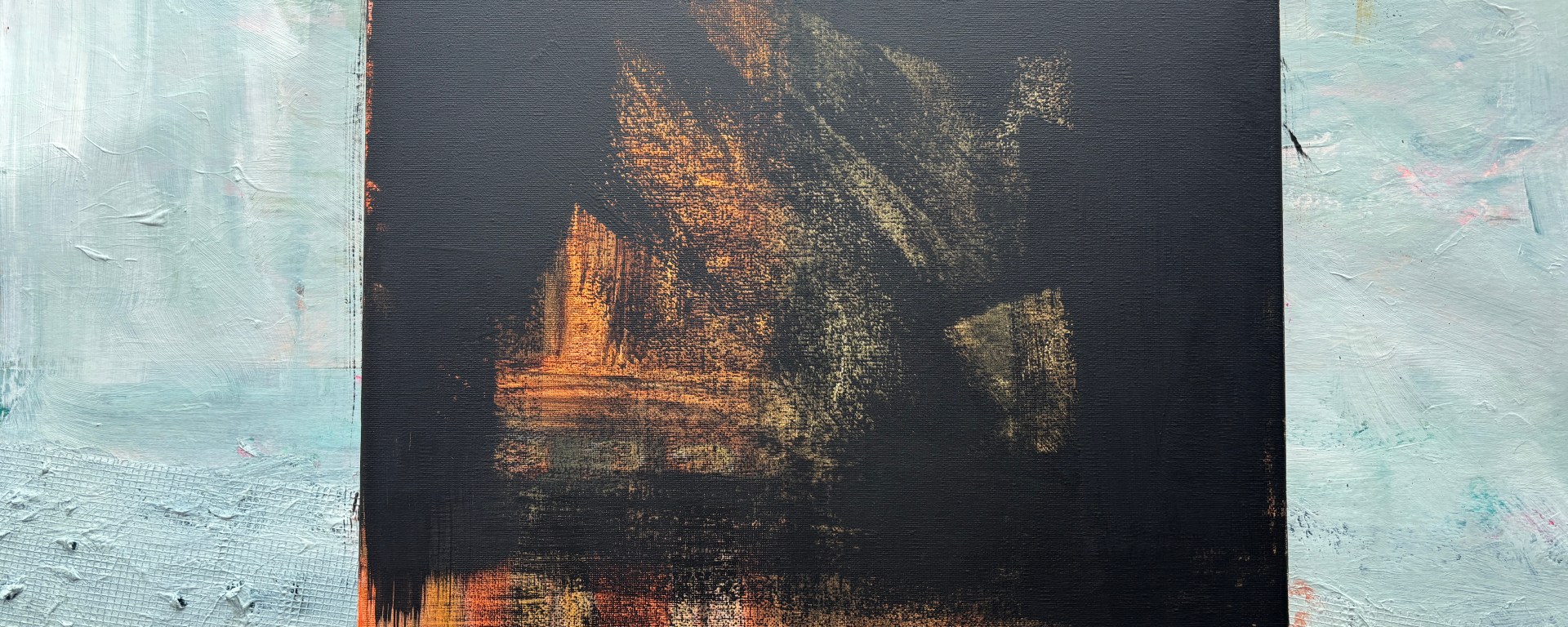
This idea would be familiar to any working-class populations in the post-war North of England, where industry was just getting back on its feet.
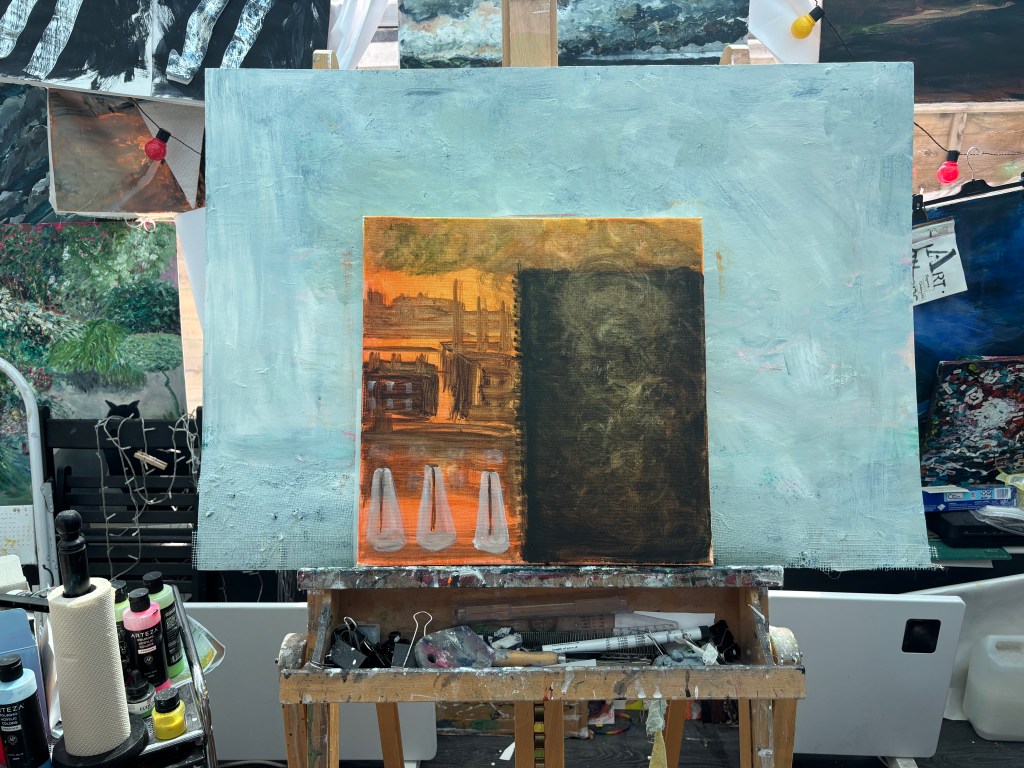
The white canvas becoming a burning book, factory chimneys, bleak housing, and what at this point seems to be a coterie of ghosts bottom left. The base layer is orange acrylic pouring paint, everything else is water soluble oils.
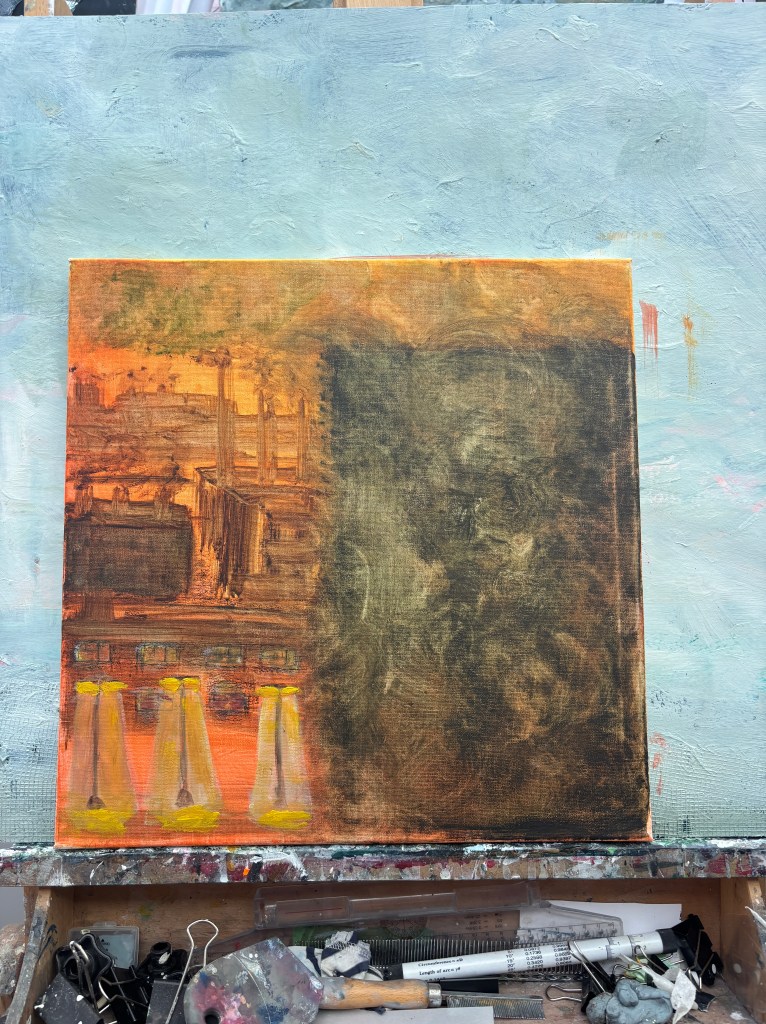
This stage should have had more mileage but seemed too chaotic for anything coherent. I’m working here from memories of Bradford, Yorkshire, in the 1950s and 60s – smoke, smog, and yellow air.
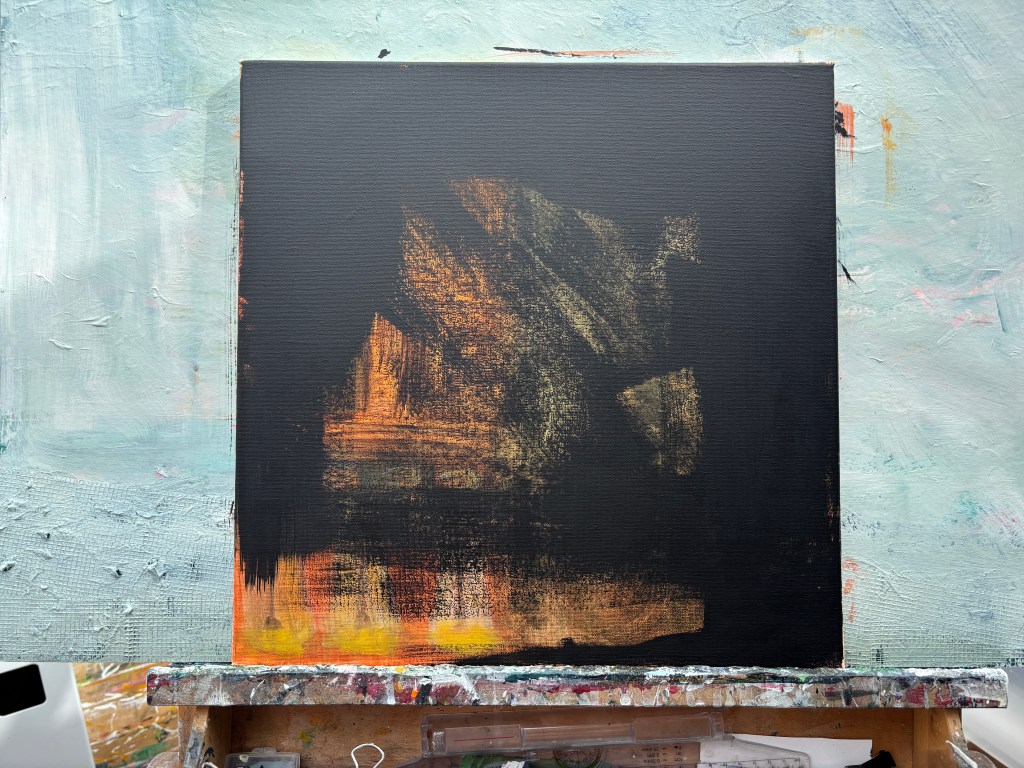
Smoke, smog, and yellow air. 2026. Suzanne Conboy-Hill. Water-soluble oils with watercolour pencil.
A wide-brush application of black paint, allowing the orange structures to be visible only in glimpses, as if through a broken wooden gate, and with the suggestion of light reflected in water along the bottom, may seem romantic, but in fact, many of these buildings were war-damaged and subject to fires. The water was more likely to be the stagnant result of bomb craters and poor drainage than a fresh and vibrant sanctuary for wildlife; and the puttering, flickering gas-powered streetlights had to be individually ignited by a man with a long pole. In the house, there was a thing called a mantle that had to be ignited in the same way, but by Dads standing on buffets holding a match. No safeguards; health and safety concerns were decades away.
Process note: this is an exercise in stopping before you detail the life out of your painting. I’ve let this one breathe despite the temptation to pick away at some of those hints and suggestions visible behind the black screen. I think it has enough weight and mystery without any fancy footwork.
© Suzanne Conboy-Hill 2026
 Strayfish Arts